
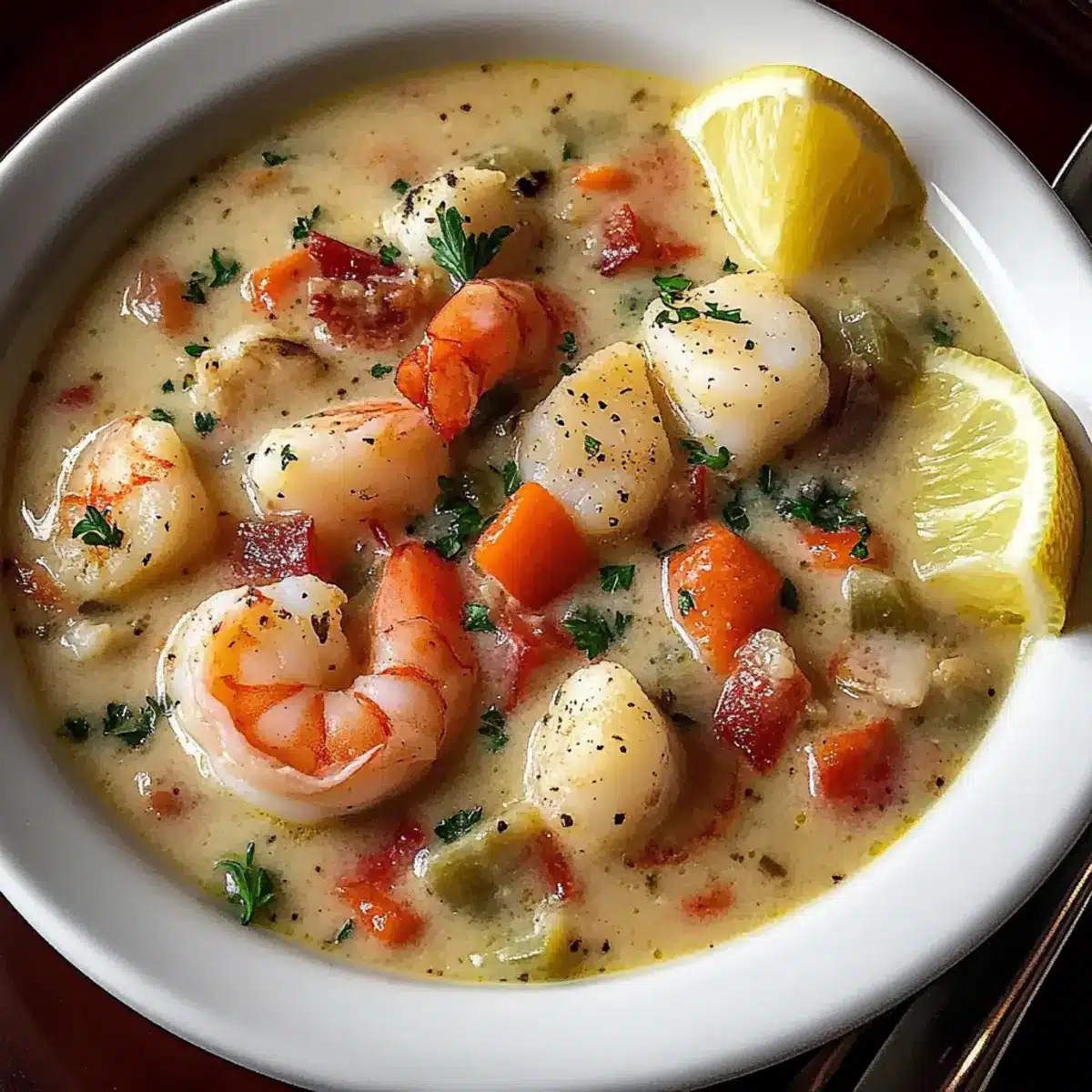
As I stood in my kitchen, the scent of simmering onions and garlic wafted through the air, instantly transporting me to the shores of Nova Scotia. Today, I’m making Nova Scotia Seafood Chowder—a creamy maritime classic that’s perfect for cozy evenings. This chowder is a warm hug in a bowl, uniting the sweetness of fresh haddock, plump shrimp, and tender scallops in a luscious broth that simply invites you to dig in. Not only is this dish a fantastic way to impress family and friends, but it also comes together in under an hour—no fast food here, just wholesome goodness! Whether you’re a seasoned home chef or someone looking to upgrade their comfort food repertoire, this recipe is sure to become a staple in your kitchen. Curious about how to whip up this delightful dish? Let’s dive in!

Why is this chowder a must-try?
Comforting, this Nova Scotia Seafood Chowder brings the cozy charm of maritime kitchens right to your dining table. Flexible substitutions allow you to customize the seafood to fit your preferences or what’s fresh at the market. Richly flavored with thyme, garlic, and cream, every spoonful is a delightful taste of the sea. Plus, it comes together in under an hour, making it a quick yet impressive meal to share with loved ones. For a finishing touch, serve it alongside some warmed crusty bread for the ultimate comfort experience—just the way we like it!
Nova Scotia Seafood Chowder Ingredients
For the Base
• Unsalted Butter – Adds richness and fat for a creamy base; substitute with olive oil for a lighter version.
• Onion – Provides foundational flavors; fresh onions yield the best taste, but you can use frozen in a pinch.
• Carrots – Adds sweetness and color; choose fresh for maximum flavor.
• Celery – Contributes crunch and aromatic depth; ensure they’re firm and crisp.
• Garlic – Enhances the chowder with aromatic sweetness; opt for fresh, as powdered garlic doesn’t match the flavor.
For the Chowder
• Potato (1 cup diced) – Creates body and creaminess; any firm variety works well.
• Seafood Stock (1 cup) – Provides depth and marine flavor; can substitute with chicken or vegetable stock.
• Dried Thyme (1 teaspoon) – Imparts herby notes that complement the seafood; fresh thyme may be substituted based on taste.
• Bay Leaf (1) – Adds aromatic depth; remember to remove it before serving.
For the Creaminess
• Heavy Cream (1 cup) – Delivers the chowder’s characteristic richness; substitute half-and-half for fewer calories, though texture may vary.
• Milk (1 cup) – Balances the richness; almond or oat milk can be used for a lactose-free option, affecting the overall creaminess.
For the Seafood
• Haddock (1 pound) – The star of the dish, providing a fresh flavor; substitute with cod or pollock if desired.
• Shrimp (1 pound) – The sweet, tender addition; fresh or frozen can be used, adjusting cooking times if necessary.
• Scallops (1 cup) – Adds sweetness and tenderness; can be replaced with crab meat or mussels for a different flavor.
For Seasoning & Garnishing
• Salt & Pepper – Essential for seasoning; adjust to your taste, with freshly ground black pepper enhancing the flavor.
• Fresh Parsley – For a touch of freshness and color; can substitute with chives or green onions based on preference.
• Lemon Wedges – Adds a burst of acidity and brightness; optional, but highly recommended to enhance the flavors of the chowder.
This collection of Nova Scotia Seafood Chowder ingredients sets the stage for a vibrant dish that warms the soul!
Step‑by‑Step Instructions for Nova Scotia Seafood Chowder
Step 1: Sauté the Aromatics
In a large pot, melt 4 tablespoons of unsalted butter over medium heat. Once melted and bubbling, add 1 diced onion, 1 diced carrot, and 1 diced celery stalk. Sauté these aromatic vegetables for about 5–7 minutes, stirring occasionally until they become tender and translucent, filling your kitchen with a delicious fragrance.
Step 2: Add Garlic
Stir in 3 minced cloves of garlic and continue cooking for an additional minute until the garlic becomes fragrant. This step enhances the base of your Nova Scotia Seafood Chowder, creating a flavorful foundation. Make sure not to burn the garlic, as it can turn bitter.
Step 3: Incorporate the Potatoes and Stock
Add 1 cup of diced potato to the pot along with 1 cup of seafood stock, 1 teaspoon of dried thyme, and 1 bay leaf. Stir the mixture to combine, then bring it to a gentle simmer. Cover the pot and let it simmer for 15–20 minutes, or until the potatoes are fork-tender, stirring occasionally to prevent sticking.
Step 4: Stir in Cream and Milk
Once the potatoes are tender, remove and discard the bay leaf from the chowder. Lower the heat slightly and add 1 cup of heavy cream and 1 cup of milk, stirring continuously. Ensure the mixture stays hot but does not boil, as this helps achieve the creamy consistency characteristic of the Nova Scotia Seafood Chowder.
Step 5: Add the Seafood
Gently fold in 1 pound of haddock, 1 pound of shrimp, and 1 cup of scallops to the pot. Cook for an additional 5–7 minutes, stirring occasionally until the seafood becomes opaque and cooked through. This is the point where all the rich flavors meld together beautifully into the velvety chowder.
Step 6: Season to Taste
Taste your chowder and season with salt and freshly ground black pepper to enhance the overall flavor. Adjust the seasoning according to your preference, ensuring each bite of the Nova Scotia Seafood Chowder bursts with delightful taste.
Step 7: Serve and Garnish
Ladle the chowder into warmed bowls for serving, and garnish each bowl with freshly chopped parsley for a touch of color. Serve with lemon wedges on the side to add a zesty brightness to your comforting bowl of seafood goodness, allowing everyone to customize their chowder experience.

What to Serve With Nova Scotia Seafood Chowder
Enjoy your chowder experience with these delightful pairings that enhance its creamy wonders.
- Crusty Bread: The perfect vessel for soaking up the rich chowder; warm and fresh, it complements the seafood beautifully.
- Butter Lettuce Salad: Crisp greens with a light vinaigrette add a refreshing crunch, balancing the chowder’s creaminess with each bite.
A light salad brings brightness to the table, creating a harmonious contrast that leaves guests craving more.
-
Steamed Asparagus: Tender asparagus with a sprinkle of lemon brightens the plate and adds a delightful crunch, perfectly complementing the chowder’s texture.
-
White Wine: A chilled glass of Sauvignon Blanc or a light Chardonnay pairs well, enhancing the seafood flavors while adding a sophisticated touch.
-
Lemon Wedges: Serve alongside for guests to squeeze over their chowder, enhancing the flavors with a bright zest that livens each spoonful.
-
Chocolate Mousse: As a sweet finale, this creamy dessert can be a delightful way to end a cozy dinner, contrasting the savory seafood flavors spectacularly.
With these pairings, your Nova Scotia Seafood Chowder becomes the star of a memorable meal!
Expert Tips for Nova Scotia Seafood Chowder
-
Fresh Seafood Matters: Ensure your seafood is as fresh as possible for an unforgettable chowder experience; frozen options can work, but might alter the flavor slightly.
-
Cream Consistency: To prevent curdling, always add the cream and milk just before serving. Keep the chowder hot but never boiling.
-
Aromatics Boost Flavor: Sauté your onions, garlic, carrots, and celery until tender—this step is vital for building the rich flavors of your Nova Scotia Seafood Chowder.
-
Customize Your Chowder: Feel free to substitute any firm white fish, like cod or pollock, for the haddock. This flexibility caters to your taste preferences and what’s available.
-
Seasoning is Key: Always taste and adjust your seasonings of salt and pepper before serving to ensure every spoonful is perfectly balanced and delightful.
-
Thicker Texture: For a heartier chowder, create a light roux by adding a bit of flour to the melted butter before adding the vegetables.
Make Ahead Options
Preparing your Nova Scotia Seafood Chowder in advance is a fantastic way to save time during busy weeknights! You can chop your vegetables (onion, carrots, and celery) up to 24 hours in advance and store them in an airtight container in the refrigerator. Additionally, you can pre-cook the diced potatoes and store them separately for up to 3 days. When you’re ready to enjoy this comforting dish, simply sauté the vegetables, add the prepped potatoes along with your seafood stock, and continue with the recipe as directed. To maintain the chowder’s creamy quality, avoid boiling the mixture after adding the dairy. Enjoy the satisfaction of a warm, hearty meal with minimal effort!
How to Store and Freeze Nova Scotia Seafood Chowder
Fridge: Keep leftovers in an airtight container for up to 2 days. Make sure to let the chowder cool completely before refrigerating to maintain freshness.
Freezer: For longer storage, freeze the chowder in a freezer-safe container for up to 3 months. Leave some space at the top as the chowder will expand when frozen.
Reheating: When ready to enjoy, thaw in the fridge overnight and reheat gently on the stove over low heat. Add a splash of milk or seafood stock to bring back the creamy consistency if needed.
Avoiding Spoilage: Always check for freshness before reheating; discard if the chowder has an off smell or unusual texture.
Nova Scotia Seafood Chowder Variations
Feel free to make this savory chowder your own by exploring these delightful variations!
-
Cod or Pollock: Substitute haddock with any firm white fish like cod or pollock for a different taste. Each choice brings a unique flavor profile while still ensuring that comforting chowder experience!
-
Crab Meat or Mussels: Swap scallops for crab meat or mussels, altering cooking times as needed. This twist offers a new depth of flavor, enhancing the maritime essence of the dish.
-
Vegetarian Friendly: Omit seafood entirely and use hearty vegetables like mushrooms or zucchini. This version allows you to enjoy the creamy goodness without touching the seafood, creating a delightful vegetarian chowder.
-
Corn & Spinach: Add sweet corn or chopped spinach for an unexpected burst of color and texture. Simply toss them in during the final cooking stage for added nutrients and vibrancy.
-
Smoky Bacon: For a touch of smokiness, add crumbled crispy bacon before serving. It gives a delightful crunch and a savory kick that complements the seafood beautifully!
-
Spicy Kick: Craving some heat? Incorporate diced jalapeños or a splash of hot sauce. This fiery alteration will send your taste buds on a delightful adventure, bringing an exciting twist to each bite.
-
White Wine Infusion: Enhance the flavor by adding a splash of dry white wine after sautéing the vegetables. It provides depth and complexity, making your chowder taste even more luxurious!
-
Lemon & Dill: Brighten the dish with fresh lemon juice and dill. The zesty flavor will uplift the creamy chowder, creating a refreshing contrast that’s incredibly satisfying.
By embracing these variations, you can enjoy a unique rendition of Nova Scotia Seafood Chowder every time, making it a versatile dish perfect for any occasion. Happy cooking!
Nova Scotia Seafood Chowder Recipe FAQs
What kind of seafood should I use for this chowder?
Absolutely! For the best flavor, fresh seafood is ideal. I recommend using haddock for its sweet taste, but you can absolutely swap it with any firm white fish like cod or pollock. If you prefer a mix, go for shrimp and scallops, but feel free to replace scallops with crab meat or mussels for a delightful variation!
How long can I store leftover Nova Scotia Seafood Chowder?
You can store leftovers in an airtight container in the refrigerator for up to 2 days. Be sure to let the chowder cool completely before refrigerating it to keep it fresh. When you’re ready to enjoy it again, simply reheat gently on low heat to avoid overcooking the seafood.
Can I freeze Nova Scotia Seafood Chowder?
Yes, you can freeze this chowder for up to 3 months! Make sure to use a freezer-safe container and allow some space at the top, as chowder expands when frozen. When you’re ready to enjoy it, thaw it in the fridge overnight, then reheat gently on the stove. Adding a splash of milk or seafood stock can help restore its creamy consistency.
How can I avoid curdling my cream in the chowder?
To prevent that unfortunate curdling, always add the heavy cream and milk just before serving and keep the mixture hot without boiling. Ensure that your chowder base is well heated, but gently stir it to maintain that creamy texture, creating a velvety finish you’ll love!
What if I have seafood allergies?
If you or your guests have seafood allergies, I recommend substituting the seafood with heartier vegetables like corn, potatoes, or perhaps a blend of creamy beans for added texture. You can also use vegetable stock instead of seafood stock to keep the base flavorful.
How should I select ripe vegetables for the chowder?
When selecting vegetables, go for fresh, vibrant ones. Look for onions that are firm and free from dark spots, and choose carrots and celery that are crisp. Potatoes should be firm too; avoid any with dark spots or extensive blemishes. The fresher the veggies, the better the flavor of your Nova Scotia Seafood Chowder!

Nova Scotia Seafood Chowder: Comfort in Every Creamy Spoonful
Ingredients
Equipment
Method
- Melt 4 tablespoons of unsalted butter in a large pot over medium heat. Add diced onion, carrot, and celery. Sauté for 5-7 minutes until tender and translucent.
- Stir in 3 minced cloves of garlic, cooking for an additional minute until fragrant.
- Add 1 cup of diced potato, 1 cup of seafood stock, 1 teaspoon of dried thyme, and 1 bay leaf. Bring to a gentle simmer for 15-20 minutes until potatoes are fork-tender.
- Remove and discard the bay leaf. Lower the heat and stir in 1 cup of heavy cream and 1 cup of milk, keeping the mixture hot but not boiling.
- Gently fold in 1 pound of haddock, 1 pound of shrimp, and 1 cup of scallops. Cook for 5-7 minutes until seafood is cooked through.
- Season with salt and freshly ground black pepper to taste.
- Ladle the chowder into warmed bowls and garnish with freshly chopped parsley. Serve with lemon wedges.
Leave a Reply